
Umahi Tinubu infrastructure spending defended as the Works Minister explains why government is prioritising roads and development over saving funds
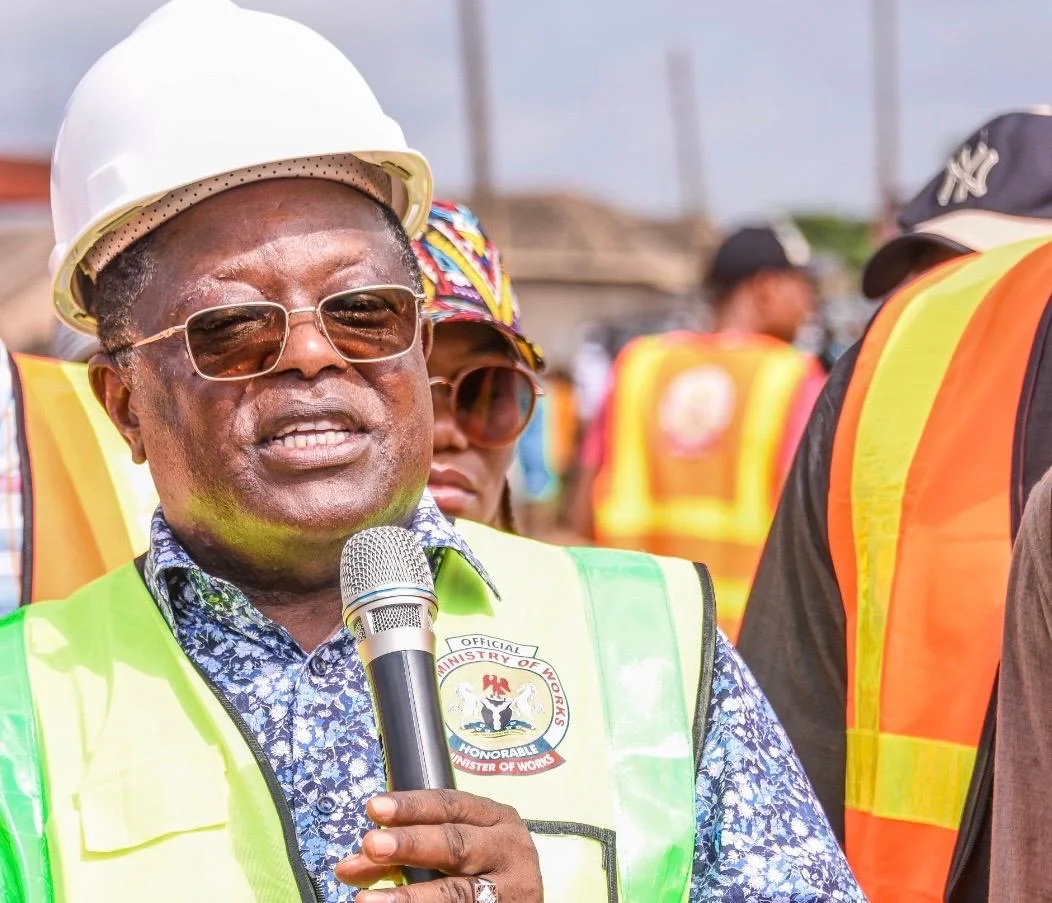
Minister of Works Senator David Umahi has defended President Bola Tinubu’s economic strategy of prioritising infrastructure development over saving public funds, saying investment in critical projects is necessary to stimulate growth and improve citizens’ welfare.
Also read: Heavy Lagos Rain Traps Commuters, Sends Transport Fares Higher
Umahi made the remarks on Monday while inspecting ongoing construction work on the Calabar-Abuja Super Highway at the Ebonyi-Benue boundary.
The minister argued that a government cannot focus on accumulating reserves while essential infrastructure remains inadequate and citizens continue to experience economic difficulties.
The Umahi Tinubu infrastructure spending position, according to the minister, reflects an approach aimed at using public resources to create long-term economic benefits through improved transportation networks and increased commercial activity.
“Infrastructure development is a catalyst for economic growth and increased GDP. That is exactly what President Tinubu is doing,” Umahi said.
He said the current administration inherited significant challenges within Nigeria’s road network but has launched an extensive programme to rehabilitate and expand federal highways across the country.
Umahi added that ongoing projects have changed public perceptions about federal roads, pointing to visible construction activities as evidence of the government’s commitment to improving infrastructure.
Speaking on the Calabar-Abuja Super Highway, the minister said work is progressing simultaneously across different sections of the route to ensure completion within the planned timeline.
The highway, which passes through Calabar, Ebonyi, Benue, Kogi and Nasarawa before reaching Abuja, is expected to improve connectivity between the South-South, South-East and the Federal Capital Territory.
Umahi said the project would reduce travel time significantly, allowing travellers from the South-South region to reach Abuja in about six hours, while commuters from Ebonyi and other South-East states could complete the journey in approximately three hours.
He also highlighted the inclusion of bypasses and bridges along the corridor, saying the features would help reduce congestion, improve road safety and support interstate trade.
Also read: Heavy Lagos Rain Traps Commuters, Sends Transport Fares Higher
The minister’s comments come amid ongoing debate over government spending priorities, with officials defending infrastructure investment as a pathway to economic expansion while critics continue to question fiscal management and public expenditure.